
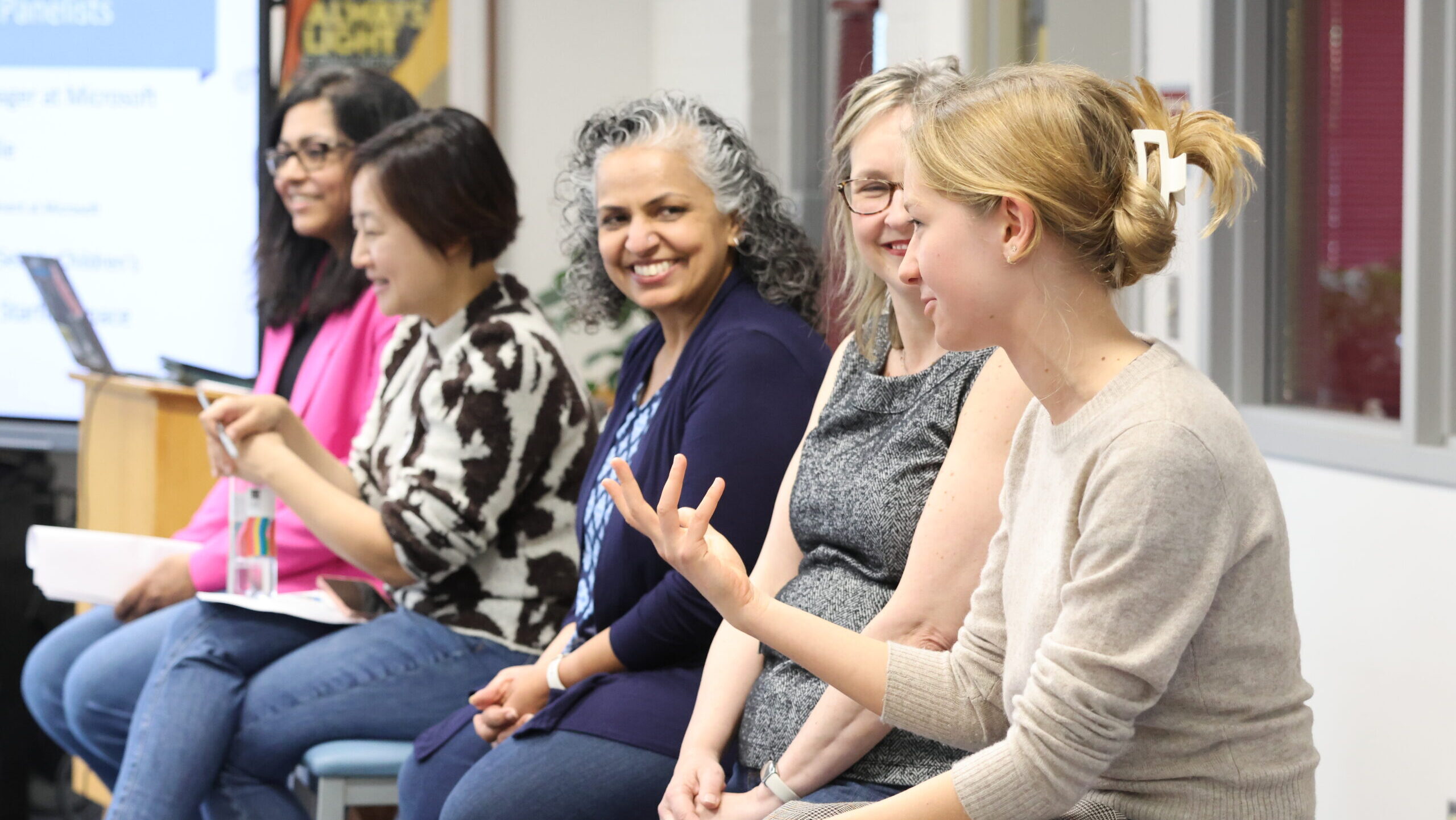
What were you like at the students’ age?
Next, your Lead Panelist will ask: “The students here today are {age range}, so let’s all share a bit about what we were like at that age. What were everyone’s favorite subjects or hobbies? Most importantly, what struggles did you have at their age, in school? And how did you overcome them?” Your response should take no more than 60 seconds.
IGNITE serves students in Kindergarten-postsecondary education. Be sure to note the age range when you sign up for an event so you can prepare for your unique audience. IGNITE will also share the age range in confirmation emails.
Think back to when you were the age of the students you’re speaking with. What were your interests and hobbies and how do they relate to your job today? For example, because you liked creating things, you became an engineer. Making the connection for the students is very helpful. What were your favorite classes in school? Start your story at their age so they can relate to you. As one of your visual aids, share a photo of yourself from when you were a similar age.

Think about the obstacles you faced when you were the students’ age. Maybe you didn’t get great grades, or had family problems or challenges outside of school. How did you handle these obstacles? IGNITE Students need to hear that life isn’t perfect and they don’t need to be; they can find success and overcome struggles. Don’t be afraid to be honest here, as authenticity helps students relate.
You might also ask for a show of hands of students who have had experiences similar to yours. For example, “In middle school, I didn’t enjoy math at all and thought I was bad at it! Show of hands—is there anyone else here who has felt like that?”
We want the girls to know you faced similar challenges and you realized that didn’t mean you weren’t capable of doing hard things and accomplishing the things you really wanted to do. And that you kept going without giving up on yourself. This could be anything, for example:
- “I didn’t get good grades in Math but I realized that I could still be an engineer because getting bad grades doesn’t mean you’re bad at something.”
- “There were challenges in my family, but I _____.”
Hearing a professional talk about their struggles and perseverance at a young age helps the students more than you can imagine.